
The Great Barrier Reef from Airlie Beach: a guest's guide
How far out the reef is, how the day trips work, how to see Heart Reef, and how to look after the reef while you're on it.
- Size
- About 2,300 km long, with almost 3,000 individual reefs
- Protected
- Marine Park since 1975, World Heritage since 1981
- Outer reef
- Hardy Reef is about 80 km east of Airlie Beach
- Getting there
- About 2 hours by boat, about 30 minutes by air
- Heart Reef
- Inside Hardy Reef. Seen from the air only
- Closer in
- Fringing reefs around the Whitsunday Islands
- Stinger season
- Late October to May. Wear a stinger suit
- Reef charge
- A small per-person charge, usually in the ticket price
What the Great Barrier Reef is
The Great Barrier Reef is the world's largest coral reef ecosystem. It runs for about 2,300 km along the Queensland coast, is made up of almost 3,000 individual reefs, and holds about 10% of the world's coral reefs. It became a Marine Park in 1975, and in 1981 it was the first coral reef ecosystem in the world to be World Heritage listed. The Great Barrier Reef Marine Park Authority manages it with the Queensland Government.
About 70 Traditional Owner groups have Sea Country within the Marine Park. In the Whitsundays, that includes the Ngaro people, whose Country takes in the islands and the water around them.
From Airlie Beach, the reef comes in two forms. The Whitsunday Islands are inside the Marine Park and have their own fringing reefs close to shore. The outer reef, the long line of reefs at the edge of the continental shelf, is further out: Hardy Reef, the closest outer reef most trips visit, is about 80 km east of Airlie Beach.
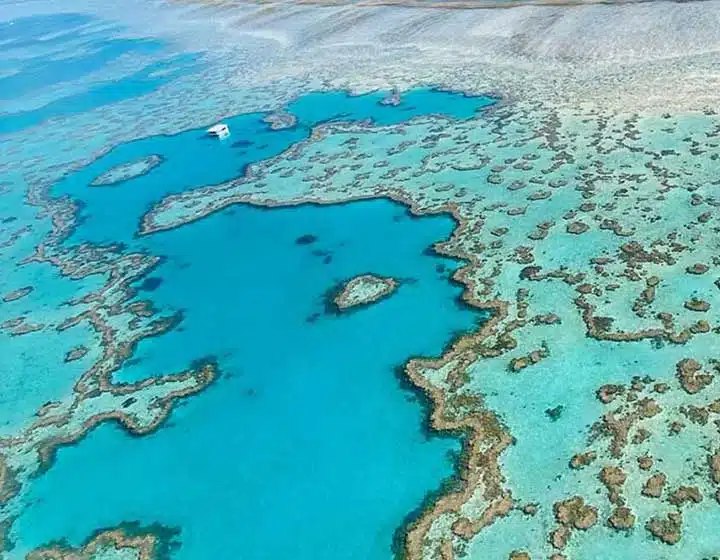
Island reefs and the outer reef
| Fringing reefs around the islands | The outer reef | |
|---|---|---|
| Where | Around the Whitsunday Islands, close to shore | Hardy Reef and nearby reefs, about 80 km east |
| Getting there | Part of many island and Whitehaven Beach day trips | About 2 hours each way by boat, or about 30 minutes by air |
| What you see | Coral, reef fish and turtles in sheltered bays | Open-water reef, deeper drop-offs, larger fish |
| Suits | A reef swim as part of a beach or island day | A full day dedicated to the reef |
If you only have one day on the water, an island trip with a snorkel stop gives you Whitehaven Beach and a reef swim in the same day. If the reef itself is the reason you came, spend a full day on the outer reef. The Whitsunday Islands guide lists the island snorkelling bays.
Getting out to the reef
| Way | Time | What you get | Suits |
|---|---|---|---|
| Pontoon day trip | Full day | A large boat to a pontoon moored at the outer reef, with snorkelling, diving and ways to see the coral without getting wet | Families, mixed groups, non-swimmers |
| Smaller reef boat | Full day | Several snorkel or dive sites on the outer reef in one day | Confident swimmers and divers |
| Scenic flight | About an hour | Heart Reef, Hardy Reef, Whitehaven Beach and Hill Inlet from the air | Short on time, photographers, anyone who gets seasick |
| Fly and cruise | Full day | Fly one way and take the boat the other, with time on the reef | Seeing Heart Reef and swimming on the reef in one day |
| Island trip with snorkelling | Half or full day | Fringing reefs around the islands, often with Whitehaven Beach | A reef swim without the long crossing |
Many outer reef trips offer introductory dives with an instructor for people who aren't certified divers, after a short medical questionnaire. Certified divers can dive on most outer reef trips.
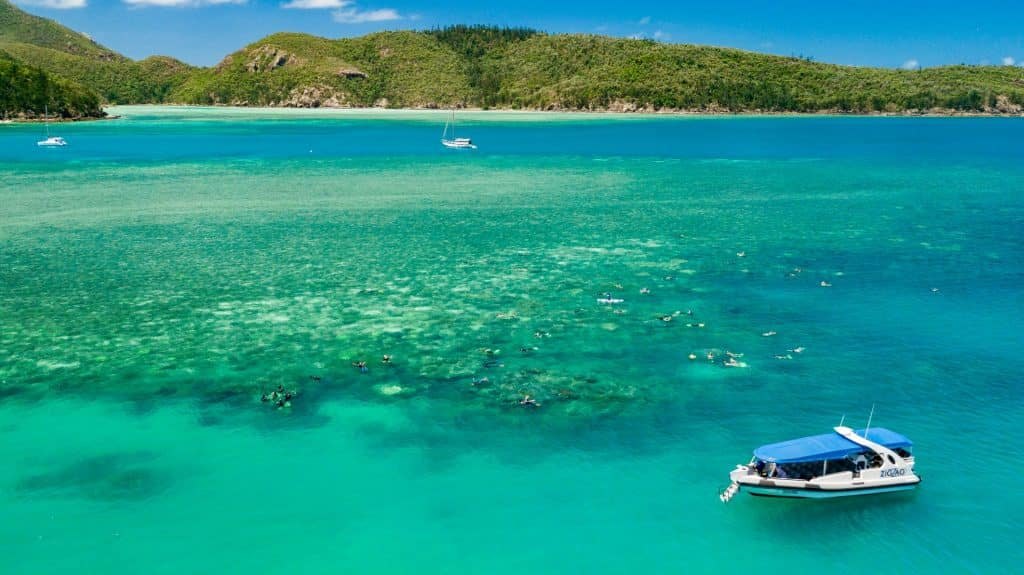
We run a tour desk at reception and can book reef trips and scenic flights for you. Guests who book their stay direct with Whitsunday Reflections get discounts on some local tours, in their confirmation email. See the tours we can book for you.
How to see Heart Reef
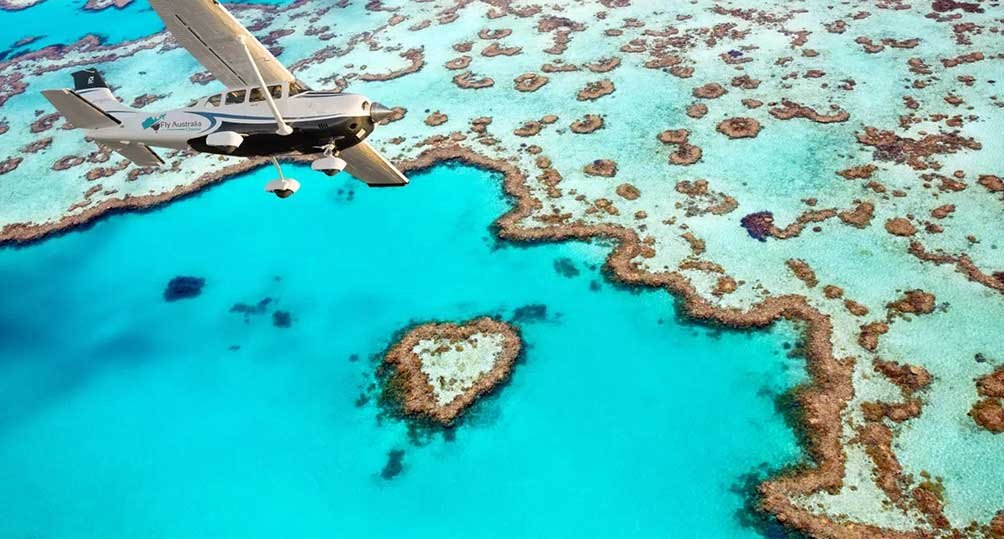
Heart Reef is a small, naturally heart-shaped coral formation inside Hardy Reef, about 80 km east of Airlie Beach. It's protected, and you can't snorkel, dive or land at it, so the only way to see it is from the air.
Scenic flights by plane, seaplane or helicopter leave from the Airlie Beach area and fly over Heart Reef, Hardy Reef, Whitehaven Beach and Hill Inlet in about an hour. Some combine the flight with time on the reef or a boat trip home.
When to go and how to plan it
Seasons
Reef trips run all year. From late October to May, marine stingers can be in the water, and reef trips supply stinger suits. Humpback whales pass through the Whitsundays in the cooler months, roughly July to September, and are often seen from the boats.
Weather and your booking
Outer reef trips depend on wind and sea conditions, and operators sometimes cancel or reschedule. Book your reef day early in your stay so there's time to move it if the weather turns.
From the apartments
Check-in at Whitsunday Reflections is from 3pm and check-out is by 10am, and reef trips leave in the morning, so plan them for a full day of your stay. Most leave from Coral Sea Marina or the Port of Airlie in Airlie Beach; Things to do in Airlie Beach explains the two marinas. If you're prone to seasickness, take tablets before you leave, since the crossing to the outer reef is in open water.
Being a good visitor on the reef
- Don't touch, stand on or kick coral. Keep your fins up and away from it.
- Don't feed the fish or touch turtles and other wildlife.
- Leave shells, coral and rocks where they are.
- Take all your rubbish back to the boat.
- Follow the crew's briefing: it covers the local rules for that site.
Every commercial trip in the Marine Park collects the Environmental Management Charge, a small per-person amount that goes to managing the reef. It's usually included in the ticket price.
The reef has been affected by several mass coral bleaching events in recent years. The Great Barrier Reef Marine Park Authority publishes regular reef health updates if you'd like to read more before you go.
Great Barrier Reef questions
How far is the Great Barrier Reef from Airlie Beach?
Hardy Reef, the outer reef most trips from Airlie Beach visit, is about 80 km east of town. It takes about 2 hours by boat or about 30 minutes by air. The Whitsunday Islands also have fringing reefs much closer in.
Can you snorkel at Heart Reef?
No. Heart Reef is a protected coral formation inside Hardy Reef, and snorkelling, diving and landing there aren't allowed. The only way to see it is on a scenic flight.
Can non-swimmers visit the Great Barrier Reef?
Yes. Pontoon day trips to the outer reef have ways to see the coral without swimming, and the crew can help nervous swimmers with flotation. A scenic flight is another option.
Do I need a dive certificate to dive on the reef?
No. Many outer reef trips offer introductory dives with an instructor for people who aren't certified, after a short medical questionnaire. Certified divers can dive on most outer reef trips.
Can Whitsunday Reflections book a reef trip for me?
Yes. Paulette and Geoff run a tour desk at reception at Whitsunday Reflections and can book outer reef trips, island snorkelling trips and scenic flights. Call 0416 048 131 or ask at reception.
More Whitsundays guides
Book with us directly and pay less for your stay
Book here direct with us: only a $200 deposit to secure your stay, with the balance due 7 days before arrival. It's always cheaper than the big booking sites. Book direct and your confirmation email includes discounts on some local tours.
Check availability